
Bergamot
A Calabrian citrus that only truly thrives on one sliver of Italian coastline.
A coastline older than Rome
Long before bergamot ever grew here, this corner of the Mediterranean was already shaping the world.
The toe of Italy's boot
Calabria sits where the Tyrrhenian and Ionian seas nearly touch, a narrow peninsula pinched between two seas. In the 8th century BC, Greek settlers arrived and founded Rhegion — today's Reggio Calabria — alongside Sybaris and Crotone, some of the wealthiest cities of Magna Graecia. This was Greater Greece: temples, philosophy, and trade routes that helped lay the foundations of Western culture, planted on Italian soil.
Rome absorbed the region in the 3rd century BC as Bruttium. When the empire fell, Calabria passed to Byzantium, then through Norman, Angevin, and Spanish hands. Every era left something behind, but the coastline itself — its sea air, its mountains, its light — never changed.
It was on this exact strip of land, millennia later, that a citrus tree did something no one had planned for.
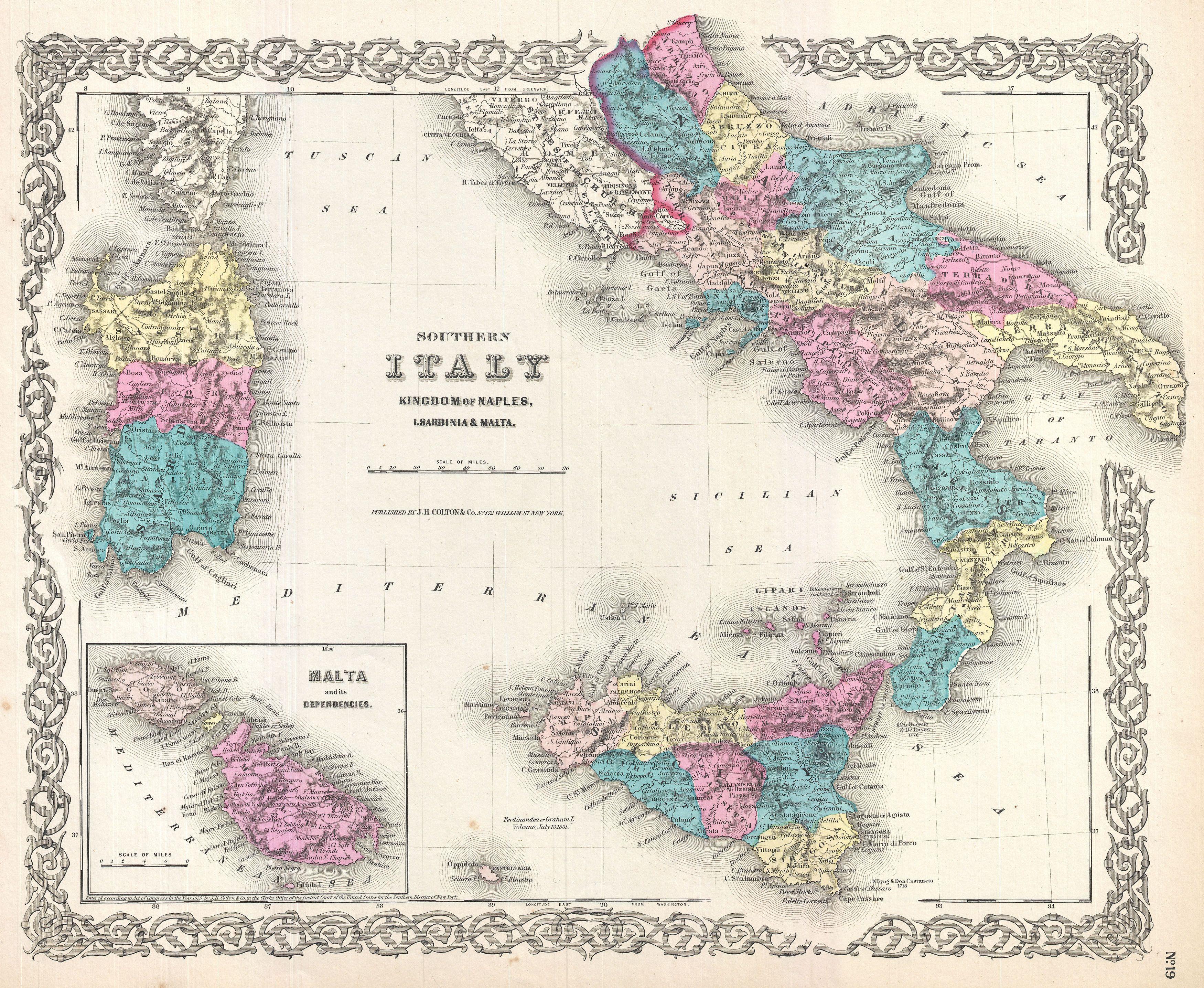
Southern Italy, 1855 — Calabria sits at the very tip of the boot, across the strait from Sicily. J. H. Colton. Public domain.

Piri Reis, map of the Calabrian coast and the Straits of Messina, Kitab-i Bahriye, 17th–18th c. Public domain.
Where citrus met chance
Bergamot has no ancient myth of its own — it simply appeared, and Calabria happened to be standing there.

“Bergamotto della grand Sorte” — Johann Christoph Volckamer, 1708. Public domain.
A spontaneous cross
Sometime before the 1600s, in the groves around Reggio Calabria, a citron and a bitter orange crossed on their own. The result was a small, intensely fragrant fruit too bitter to eat — but one that smelled like nothing else on earth. No one bred it on purpose. It simply grew there, and only there.
Paris takes notice
At Café Procope, the oldest café in Paris, ices and syrups were being flavored with Calabrian bergamot water — one of the first times the fruit's name traveled beyond Italy.
A name with two stories
Some trace "bergamot" to Bergamo, a town in Lombardy. Others point further east, to the Ottoman Turkish beg armudi — "the prince's pear." Either way, by the early 18th century the fruit itself had become a luxury export, prized by perfumers for an oil no other citrus could match.
Still one coastline
Bergamot now scents everything from eau de cologne to Earl Grey tea. And after roughly three centuries of trying, growers elsewhere still haven't managed to reproduce it. The real thing still comes from one place.
The ninety-kilometer miracle
Bergamot has been planted in Ivory Coast, Argentina, Georgia, and beyond. None of it smells quite like Calabria's.
A microclimate that can't travel
Real bergamot — the kind with the oil chemistry perfumers and formulators actually want — still grows almost exclusively along a narrow strip of the Ionian coast, roughly from Villa San Giovanni down to Brancaleone. It's a sliver of land where the Aspromonte mountains taper down to meet two seas at once.
That geography creates something unusual: alluvial, mineral-rich soil, barely any swing between day and night temperatures, rainy winters, and warm, humid summers. Together they push the fruit's peel to produce an essential oil with an unusually high concentration of linalool and linalyl acetate — the compounds behind bergamot's brightness, and much of what makes it useful on skin and scalp.
Move the same cutting somewhere else, and the tree survives. The oil doesn't come out the same.
"The very exclusive microclimate of this coast — soil, sea, and mountain working together — has never been successfully copied anywhere else in the world."

The DOP-protected growing zone, following the coast of the Province of Reggio Calabria. Map: S. Autellitano, CC BY.

Bergamot harvest, Reggio Calabria countryside, 1965. © Touring Club Italiano, CC BY-SA.

Citrus bergamia — Köhler's Medizinal-Pflanzen, 1887. Public domain.
A fruit worth an academy
Because authentic Calabrian bergamot is this rare, Reggio Calabria built an institution around protecting it.
Internazionale
del Bergamotto
Recognized, not just sourced
The International Bergamot Academy of Reggio Calabria exists to study, protect, and promote the fruit's heritage — naming a small group of Ambassadors each year for the role they play in bringing genuine Calabrian bergamot to the world.
Piero Pirri — co-owner of Pirri Hair Studio in Greenwich, Connecticut, with his brother Luigi — was named an Ambassador of the Academy for introducing bergamot to a wider audience. Every Pirri Original formula carries the Academy's seal of approval: a guarantee that the bergamot inside is the genuine, single-origin fruit of Reggio Calabria.
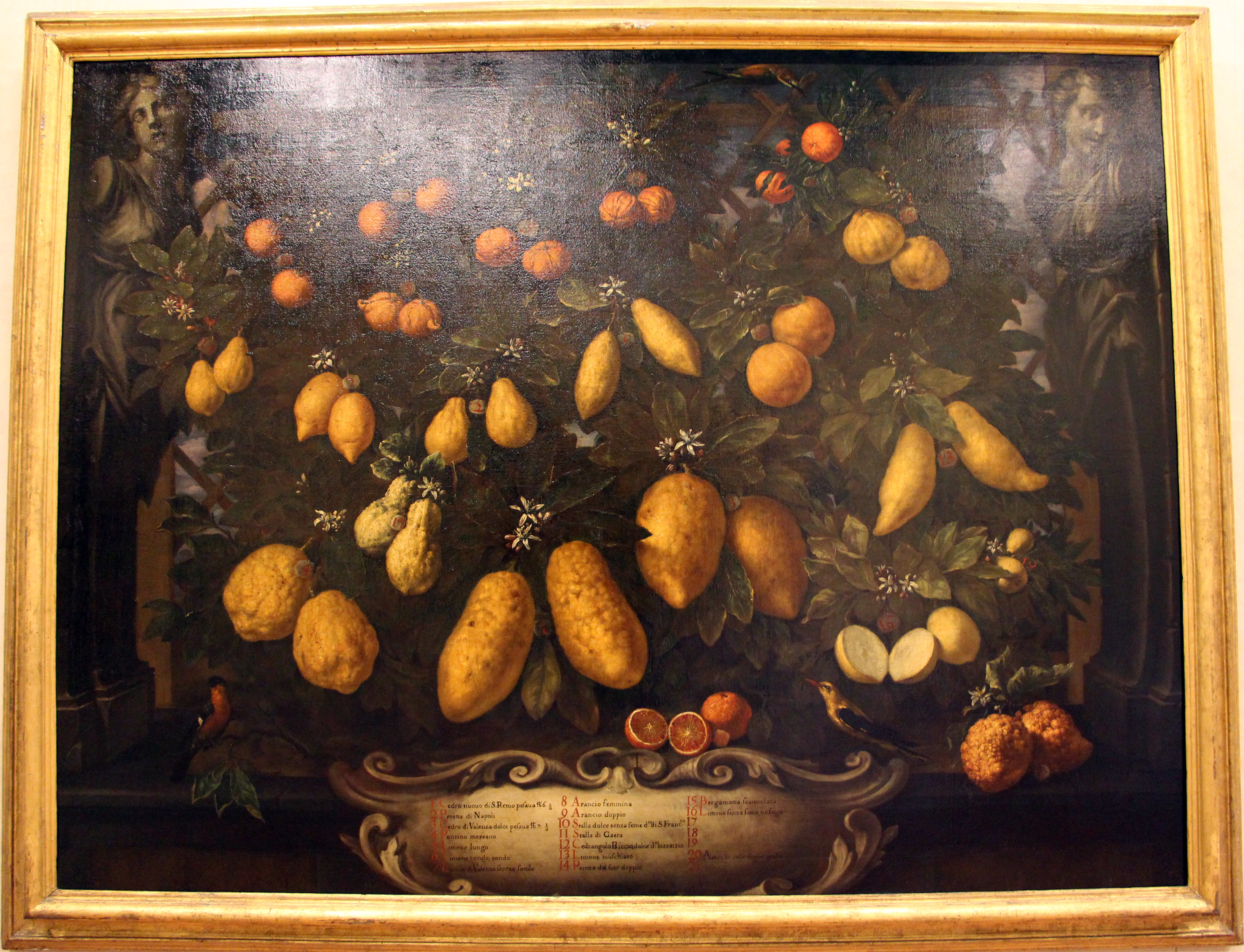
Bartolomeo Bimbi, still life with bergamots and citrus, 1715. Public domain.
Why it belongs in your hair care
The same terroir that makes Calabrian bergamot smell unlike anything else also makes it work on the scalp.
Balances, doesn't strip
Bergamot's natural astringency helps regulate sebum, curbing oily buildup at the root without over-drying strands.
Keeps the scalp clean
Its natural antimicrobial character helps keep the scalp environment clear, so hair can grow the way it's meant to.
Softens and seals shine
The oil's fatty acids smooth the cuticle, fighting frizz and locking in the kind of shine that reads as healthy.
Four steps, one origin
Cleanse, condition, nourish, and finish — every formula built around Bergamot Fruit Extract and Bergamot Fruit Juice from Reggio Calabria, and nothing else pretending to be it.
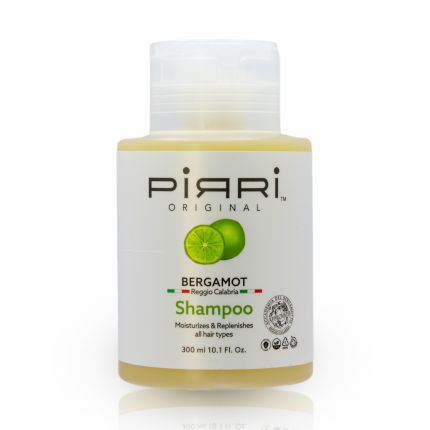
Daily Bergamot Shampoo
An invigorating everyday cleanse
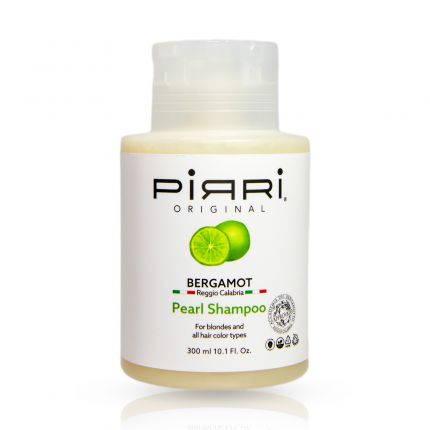
Bergamot Pearl Shampoo
Gentle, color-safe cleanse with rosemary and Calabrian olive leaf
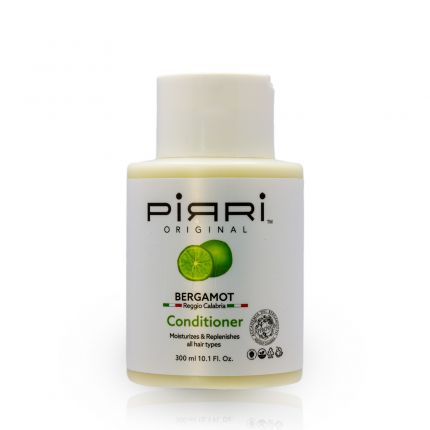
Daily Bergamot Conditioner
Lightweight hydration, softer and more manageable hair
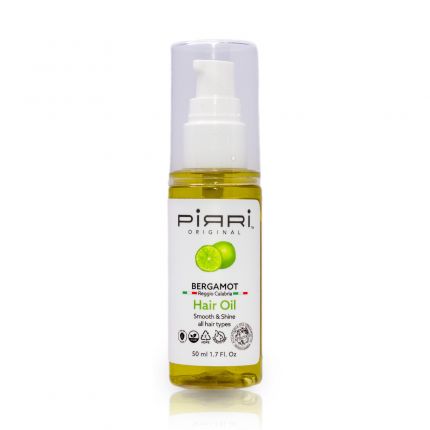
Bergamot Hair Oil
100% bergamot peel oil for shine and a calmer scalp
One coastline. One ritual.
Everything Pirri Original makes starts on the same ninety-kilometer stretch of Calabrian coast — because that's the only place the real thing grows.
Shop the bergamot ritual-

Follow us on Social Media
-
Quick Links
Quick Links -
Information
Information -
Subscribe to newsletter
Sign up now for updates, tips, and exclusive offers!